
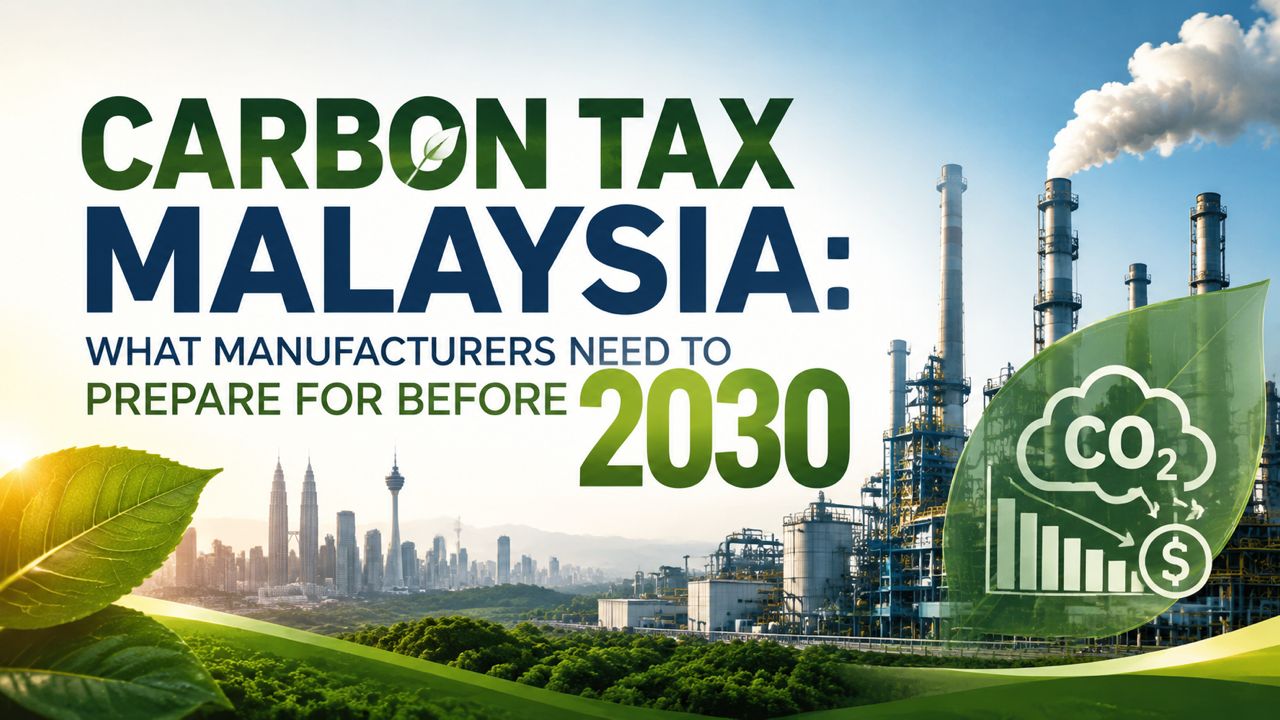
Carbon Tax Malaysia for Manufacturers is becoming an increasingly important consideration as the country moves toward stronger climate policies and carbon pricing mechanisms. The introduction of new carbon pricing frameworks marks a fundamental shift in the fiscal landscape for industrial operators. As governments implement climate policies, carbon emissions are transitioning from environmental metrics into direct operational considerations. For heavy industries and supply chain partners, this policy shift requires immediate operational alignment to safeguard profit margins and maintain international trading compliance.
For industrial leaders navigating this changing regulatory landscape, optimizing energy structures and emissions accounting is now a critical milestone. This article provides an analytical look at upcoming tax compliance frameworks, structural risks, and regional implementation timelines. Readers will gain actionable insights into preparation strategies, allowing senior management to execute timely adjustments before carbon tax frameworks take full economic effect.
As manufacturers prepare for evolving environmental regulations, sustainability reporting and ESG considerations are becoming increasingly important. Companies can refer to Bursa Malaysia Sustainability Reporting requirements to better understand expectations around climate-related disclosures, sustainability practices, and corporate responsibility.
How Carbon Tax for Malaysian Manufacturers Will Impact Industrial Operations
The Carbon Tax Malaysia framework is an environmental fiscal policy designed to address greenhouse gas emissions by introducing a regulatory price on carbon dioxide equivalent (tCO₂e). As a key mechanism to accelerate structural decarbonisation in the manufacturing sector, this framework requires industrial facilities to account for the economic impact of their environmental footprint. The policy initially focuses on high-emission industries, particularly the energy, iron, and steel sectors, before potentially expanding to broader industrial processing activities.
To ensure regulatory enforceability, the system is expected to align with national climate governance frameworks, including developments related to Malaysia’s climate legislation. Manufacturers will need reliable emissions monitoring, reporting, and verification systems to ensure that reported carbon data accurately reflects actual factory operations. This shift transforms carbon management from a voluntary environmental initiative into a strategic operational priority that directly influences cost structures, compliance planning, and long-term competitiveness.
For manufacturers preparing for future carbon regulations, understanding global carbon pricing approaches can provide valuable insights. Resources such as the World Bank Carbon Pricing Dashboard allow businesses to compare carbon pricing mechanisms implemented across different economies.
Geopolitical and Commercial Exposure for Regional Exporters

For factory operators in Malaysia, the rollout of the Malaysia Carbon Tax 2026 strategy introduces significant financial and structural operational risks. Local industrial firms are highly exposed due to a historical reliance on fossil-fuel-intensive energy grids and legacy thermal systems. Organizations that delay structural changes face a compounding double penalty: direct domestic carbon taxation and escalating grid tariffs driven by upstream power sector adjustments.
Based on our industry experience in regulatory compliance frameworks, unoptimized industrial sites will experience sharp margin erosion as these tax thresholds take effect. Furthermore, international trade dependencies create an immediate secondary threat for local exporters moving goods to western markets. Failing to establish rigorous compliance systems leaves Malaysian exporters vulnerable to external border penalties, threatening vital international supplier relationships.
Market Signals: The Global Drivers Accelerating Decarbonization
The global manufacturing sector is undergoing a rapid transition driven by strict international trade policies and evolving national economic frameworks.
- Global Border Penalties: The phased introduction of the Carbon Border Adjustment Mechanism (CBAM) by the European Union heavily penalizes carbon-intensive imports like steel, aluminum, and electricity from unaligned jurisdictions.
- Industrial Market Alignment: National carbon tax frameworks are being built to interoperate cleanly with the National Carbon Market Policy, allowing companies to buy or sell carbon credits via platform tools like the Bursa Carbon Exchange.
- The Energy Efficiency Mandate: Regulatory bodies are strengthening the Energy Efficiency and Conservation Act (EECA) to force high-energy-consuming manufacturing facilities to report their comprehensive power baselines regularly.
Operational Friction: Identifying the Vulnerabilities in Legacy Systems
Adapting an enterprise manufacturing footprint to meet stringent national carbon metrics exposes deep structural gaps within standard operational tracking systems.
- Inadequate Greenhouse Gas MRV Systems: Most industrial facilities lack the sophisticated Measurement, Reporting, and Verification tools required to gather defensible carbon data for formal tax audits.
- Complex Scope 1 and Scope 2 Emissions Tracking: Separating direct emissions from fuel combustion (Scope 1) and indirect emissions from purchased electricity (Scope 2) presents severe data management issues for non-digitized back offices.
- Unplanned Capital Expenditure for Decarbonization: Upgrading legacy boilers, switching to alternative fuels, and deploying solar infrastructure requires significant capital investments that strain annual corporate budgets.
- Fragmented Supply Chain Carbon Data: Primary manufacturers frequently struggle to obtain accurate raw material carbon intensity metrics from smaller, non-compliant upstream vendors.
The De-Risking Roadmap: Actionable Implementation Protocols
Achieving long-term manufacturing carbon compliance requires a structured, multi-phase engineering approach rather than reactive corporate reporting adjustments.
Diagnostic Implementation and Data Validation
Deploy automated tracking networks across all facilities to collect precise data on fuel consumption, chemical reactions, and electricity usage. Transitioning from estimated spreadsheets to continuous, verifiable data streams is the foundational step required to survive strict regulatory audits.
Optimizing Plant Infrastructure and Thermal Systems
Execute comprehensive thermal and electrical energy audits to locate systemic power losses across your assembly lines. Upgrading to high-efficiency motors, recovering waste heat from kilns, and optimizing compressed air networks yields immediate financial savings while lowering your tax liabilities.
Integrating Lean Digital Tracking Ecosystems
Integrate localized sustainability frameworks to reduce your baseline footprint without reducing your total plant output volume. To understand how to sequence these efficiency improvements across complex production facilities, review our strategic manual on industrial data tracking frameworks.
Deploying Specialized Environmental Engineering Resources
When internal engineering teams are fully dedicated to maintaining daily output quotas, onboarding expert decarbonisation in manufacturing consultants provides essential technical support. External advisors bring specialized diagnostic equipment, regulatory insights, and compliance experience required to integrate renewable energy pathways without interrupting active client production schedules.
Capital Allocations and Future-Proofing Strategy

The path toward achieving Net-Zero Emissions Malaysia 2050 will alter the structural profitability of the global industrial sector over the next decade. As national emissions thresholds tighten, carbon accounting will become as legally binding and scrutinized as corporate financial reporting.
Our observations of industrial transition projects show that early movers who actively invest in green technologies capture disproportionate market share. Executives must treat sustainability preparation as an urgent strategic necessity rather than a delayed administrative task. Ensuring your facilities are structurally optimized ahead of the enforcement curve insulates your supply chain from localized tariff shocks and positions your brand as a preferred global vendor.
Boardroom Inquiries: Clarifying Compliance Standards
When does the first phase of the carbon tax take effect?
The official rollout begins with the Malaysia Carbon Tax 2026 implementation, focusing initially on large upstream emitters. Over time, the tax footprint will expand to encompass broader manufacturing sectors as the national grid decarbonizes.
What is the difference between Scope 1 and Scope 2 emissions?
Scope 1 emissions are direct greenhouse gases produced by assets owned or controlled by your company, such as factory furnaces. Scope 2 emissions are indirect emissions from the generation of electricity, heat, or cooling purchased and consumed by your facility.
How does the Carbon Border Adjustment Mechanism affect local exporters?
The Carbon Border Adjustment Mechanism (CBAM) requires international buyers to purchase carbon certificates to offset the emissions embedded in imported goods. If Malaysia introduces an equivalent domestic tax, these external border penalties can be neutralized or significantly reduced.
Can voluntary carbon credits be used to pay domestic carbon taxes?
Under evolving structures like the National Carbon Market Policy, limited percentages of tax liabilities may be offset using approved local carbon credits. However, these offsets must be fully verified through recognized Greenhouse Gas MRV Systems to be legally accepted.
Preserving Value in an Era of Environmental Taxation
Protecting your organization from rising carbon liabilities requires an immediate, structural commitment to industrial energy efficiency and automated emissions tracking. Relying on outdated data logging methods or delaying capital allocations for energy transitions introduces severe operational risks. Long-term commercial resilience belongs to industrial operators that systematically eliminate carbon waste before regulatory enforcement impacts their financial bottom line.
From an industrial engineering standpoint, early diagnostics are critical to mitigating carbon tax exposure cleanly and affordably. To evaluate your plant’s current energy footprint and outline a clear compliance roadmap, visit our dedicated service page to schedule an initial carbon readiness assessment with our advisory group.