
Manufacturing plants often focus on visible operating expenses such as raw materials, labour, energy and equipment. However, some of the most significant costs affecting profitability are hidden within everyday operations.
Unnecessary production delays, repeated quality issues, inefficient workflows and poor resource utilization can gradually increase operating expenses without immediately appearing in financial reports. Over time, these inefficiencies can reduce productivity, weaken competitiveness and limit business growth.
Understanding the hidden costs of inefficient manufacturing plant operations is an important step towards achieving operational excellence. By identifying where time, resources and money are being lost, manufacturers can develop practical strategies to improve performance and strengthen their operations.
What Are Inefficient Manufacturing Plant Operations?
Inefficient manufacturing plant operations occur when production activities consume more time, resources or effort than necessary to achieve the desired output.
These inefficiencies may result from outdated processes, poor production planning, inadequate communication, underutilized equipment or ineffective operational management.
For example, a manufacturing plant may have sufficient machinery and employees to meet production targets but still experience delays because materials are unavailable when required or production schedules are poorly coordinated.
Although individual problems may appear minor, their combined impact can create significant operational and financial challenges.
6 Hidden Costs of Inefficient Manufacturing Plant Operations
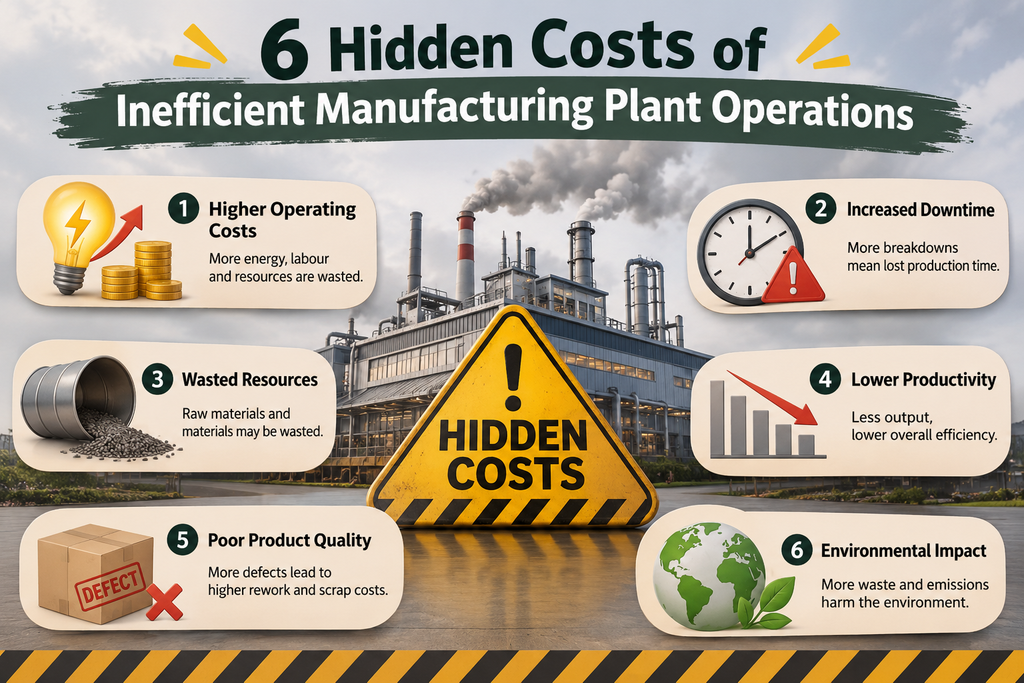
1. Increased Production Costs
Inefficient workflows can increase the cost of producing each unit.
When employees spend additional time completing tasks, equipment operates below its intended capacity or production requires repeated adjustments, manufacturers may incur higher costs without increasing output.
For example, unnecessary movement of materials across a plant can increase handling time and labour requirements.
Over time, these inefficiencies can reduce profit margins and make products less competitive.
2. Production Downtime and Lost Output
Unexpected equipment interruptions, poor maintenance planning and operational bottlenecks can prevent manufacturing plants from operating at their intended capacity.
Even short periods of downtime can disrupt production schedules, delay orders and reduce overall output.
The financial impact extends beyond the immediate interruption. Businesses may also need to reschedule production, arrange overtime or use additional resources to recover lost output.
Manufacturers should therefore evaluate not only the frequency of downtime but also its effect on the entire production process.
3. Material Waste and Inventory Costs
Poor production planning and ineffective inventory management can lead to excessive material consumption, unnecessary stockholding and increased storage expenses.
Materials may become damaged, outdated or unsuitable for production requirements.
Excess inventory can also tie up working capital that could otherwise support business expansion or other operational priorities.
By improving inventory visibility, coordinating procurement with production requirements and reducing unnecessary material usage, manufacturers can make better use of available resources.
4. Quality Issues and Rework
Inconsistent production processes can result in defects, rejected products and repeated work.
When a product fails to meet quality standards, manufacturers may need to spend additional time and resources on inspection, repair or replacement.
These costs can also affect delivery schedules and customer satisfaction.
Quality issues may indicate deeper operational problems, such as unclear procedures, inconsistent working methods or inadequate process controls.
Identifying the underlying causes helps manufacturers reduce repeated errors rather than simply correcting individual defects.
5. Underutilized Equipment and Resources
Manufacturing plants may invest significantly in machinery, technology and workforce capacity. However, these resources do not always deliver their full potential.
Equipment may remain idle because of scheduling problems, material shortages or delays in upstream processes.
Employees may also spend substantial time waiting for instructions, information or approvals.
When existing resources are not used effectively, manufacturers may experience higher operating costs without achieving the expected production output.
Improving coordination and workflow design can help organizations get more value from their existing resources.
6. Lost Business Opportunities
Operational inefficiencies can affect a manufacturer’s ability to respond to customer demand.
When production schedules are unreliable or delivery times are consistently delayed, customers may lose confidence in the business.
Manufacturers may also struggle to accept additional orders because their existing operations cannot support increased demand.
These lost opportunities can limit revenue growth and weaken the organization’s competitive position.
Why Manufacturing Inefficiencies Often Go Unnoticed
Many operational problems develop gradually and become accepted as part of everyday work.
Employees may develop informal methods to overcome recurring issues, while management may focus on meeting immediate production targets rather than investigating underlying inefficiencies.
In some cases, performance is measured primarily through output without considering material waste, downtime, quality or resource utilization.
As a result, manufacturing plants may continue operating with inefficient processes because the full impact is not clearly understood.
A structured operational assessment can help organizations uncover these issues and evaluate their effect on overall performance.
How to Identify Hidden Costs in Manufacturing Operations
Step 1: Review Existing Operational Performance
Begin by examining production records, operating expenses, inventory reports, maintenance data and quality performance.
These records can help identify recurring problems and areas where actual performance differs from operational targets.
Step 2: Analyse Manufacturing Workflows
Review how materials, information and work move through the plant.
Process mapping can help identify unnecessary activities, repeated handling, delays and bottlenecks that affect production flow.
Step 3: Investigate Root Causes
Once inefficiencies are identified, investigate why they occur.
For example, frequent production delays may be caused by inaccurate scheduling, supplier coordination issues or insufficient visibility of material availability.
Understanding the root cause allows businesses to develop more effective solutions.
Step 4: Measure the Financial Impact
Estimate how identified inefficiencies affect operating costs, production capacity, quality and delivery performance.
This helps management understand which problems have the greatest financial impact and should be prioritized.
Step 5: Prioritize Improvement Opportunities
Focus on issues that create significant operational disruption or recurring financial losses.
Improvement priorities should consider potential benefits, implementation costs, available resources and the organization’s strategic objectives.
How Operational Excellence Helps Reduce Hidden Costs
Operational excellence focuses on improving how manufacturing operations function as a whole.
Rather than treating individual problems separately, organizations evaluate the relationships between production, maintenance, inventory, quality and workforce management.
Several approaches can help manufacturers address inefficiencies.
Process optimization: Simplifying workflows and removing unnecessary activities can reduce delays and improve production flow.
Production planning improvement: Better coordination of materials, equipment and schedules can help reduce idle time and production interruptions.
Performance management: Monitoring operational indicators allows management to identify performance gaps and make informed decisions.
Continuous improvement: Regularly reviewing operational performance helps businesses identify new opportunities to eliminate waste and improve efficiency.
Digital transformation: Appropriate digital tools can improve operational visibility, information sharing and decision-making.
The most effective approach depends on the specific challenges and operational priorities of each manufacturing plant.
The Role of Manufacturing Consulting
Manufacturing consulting can help organizations evaluate operational challenges and identify improvement opportunities that may not be immediately visible through routine management activities.
Consultants can support plant assessments, workflow analysis, operational performance reviews and improvement planning.
For manufacturing companies, this may involve examining production processes, resource utilization, inventory management, operational costs and performance measurement systems.
A structured consulting approach helps management understand where inefficiencies occur, why they exist and which improvements are most likely to deliver measurable business value.
For SMEs, this can be particularly useful when internal teams have limited resources or need an independent perspective on complex operational challenges.
Conclusion: Turn Hidden Operational Costs into Improvement Opportunities
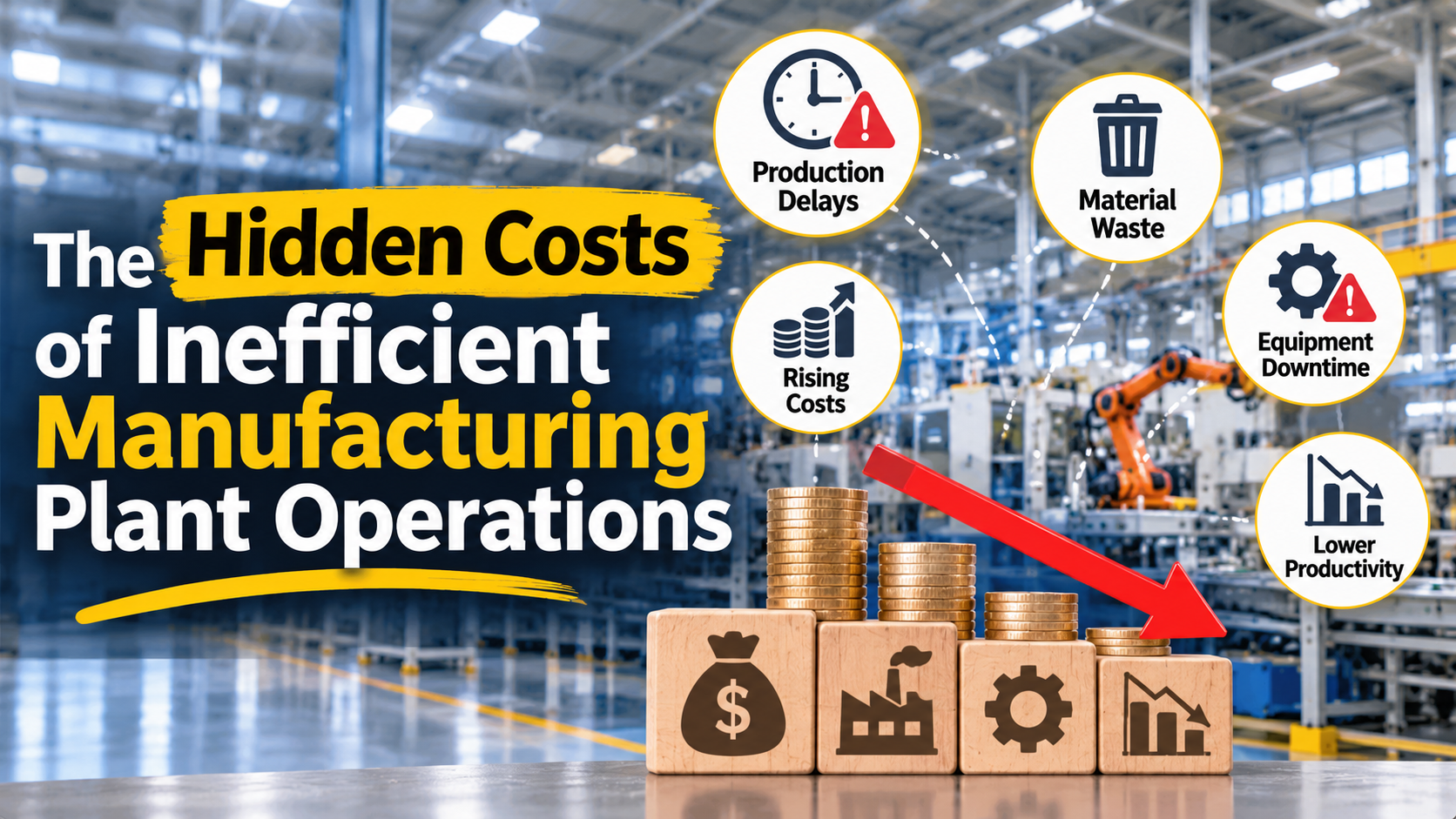
Inefficient manufacturing plant operations can create significant hidden costs through production delays, material waste, quality issues, underutilized resources and lost business opportunities.
These challenges often develop gradually, making them difficult to recognize without a structured assessment of operational performance.
By identifying inefficiencies, understanding their root causes and prioritizing practical improvements, manufacturers can strengthen productivity, improve resource utilization and gain better control over operating costs.
Operational excellence is not simply about producing more. It is about ensuring that people, processes and resources work together effectively to support business objectives.
Barton Consultancy helps businesses identify operational challenges, evaluate performance gaps and develop practical strategies to strengthen manufacturing operations.
Contact Barton Consultancy to explore how a structured operational assessment can help your manufacturing plant uncover hidden costs and improve operational performance.