
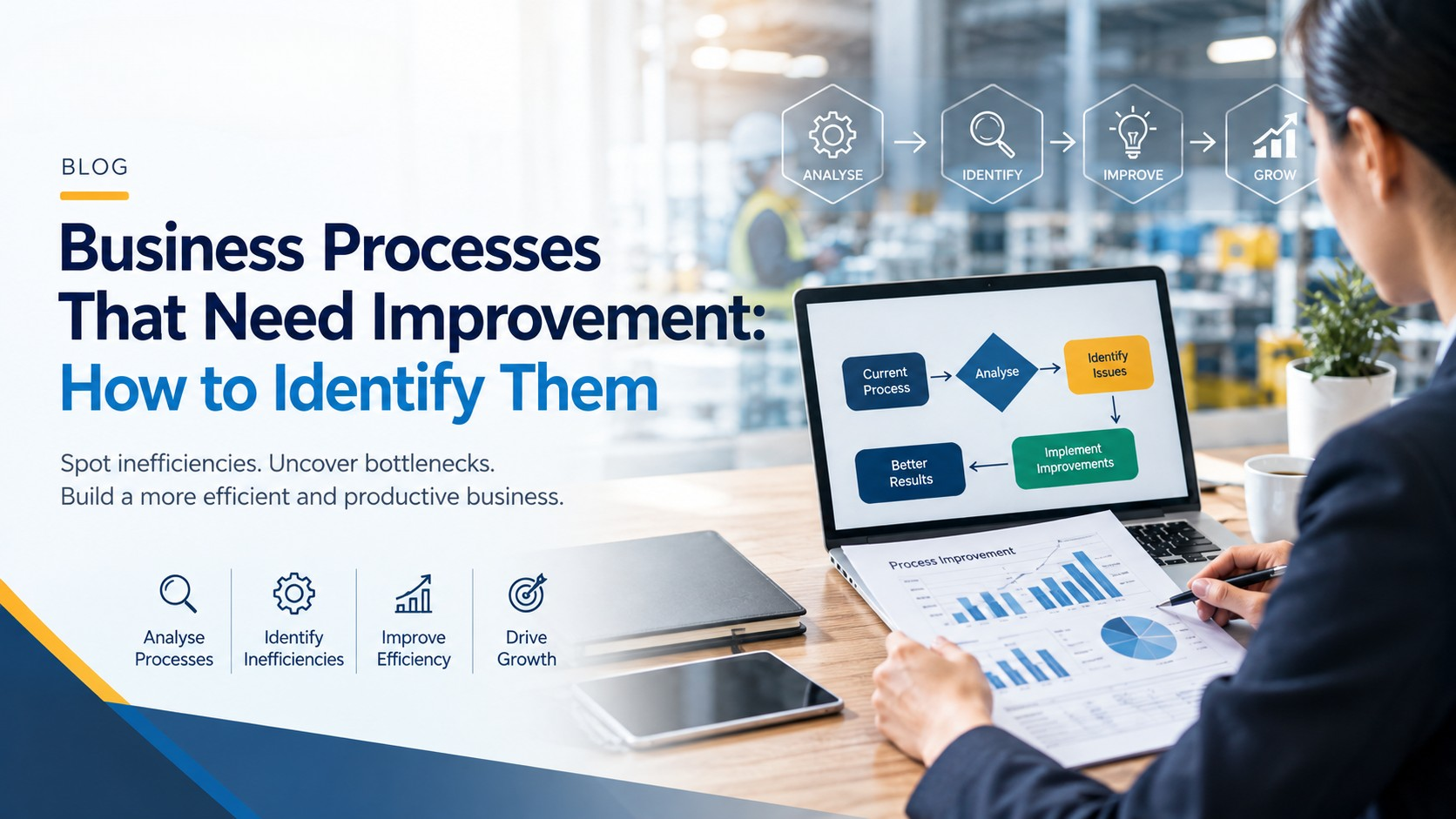
Efficient business processes are essential for organizations seeking to improve productivity, control operating costs and achieve sustainable growth. However, as businesses expand, existing procedures may become outdated, complicated or inefficient. These challenges can lead to production delays, unnecessary expenses, communication gaps and declining customer satisfaction.
Identifying business processes that need improvement is the first step towards building a more efficient organization. By reviewing workflows, analysing performance data and gathering employee feedback, businesses can identify operational weaknesses and determine which areas require attention.
For Malaysian small and medium-sized enterprises (SMEs) and manufacturing companies, a structured business process analysis can help management make informed decisions, allocate resources more effectively and improve overall operational performance.
This article explores the key warning signs of inefficient processes, practical methods for assessing business operations and strategies for turning operational challenges into opportunities for improvement.
What Are Business Processes?
Business processes are a series of connected activities that organizations perform to achieve specific objectives. They determine how tasks are completed, how information flows between departments and how resources are used to deliver products or services.
Common examples include:
- Procurement and supplier management
- Inventory management and production planning
- Quality control and product inspection
- Employee recruitment and onboarding
- Invoice processing and financial administration
- Customer service and order fulfilment
When these processes are clearly defined and properly managed, employees can complete their work more consistently and efficiently. However, unclear responsibilities, duplicated tasks and outdated procedures can prevent businesses from achieving their operational goals.
Understanding how individual activities connect allows management to identify weaknesses and determine where process improvement can deliver the greatest benefits.
7 Signs That Business Processes Need Improvement
Recognizing the warning signs of inefficient operations helps businesses address problems before they affect productivity, profitability and customer relationships.
1. Frequent Delays and Missed Deadlines
Repeated delays are a common indication that a business process may not be functioning effectively. Excessive approval stages, poor scheduling, limited resources and unclear responsibilities can prevent employees from completing tasks on time.
For example, a manufacturing company may regularly miss delivery deadlines because its production schedule does not account for material availability or actual machine capacity.
Businesses should examine where delays occur, how frequently they happen and which activities contribute most to the problem. Identifying these bottlenecks can help management streamline workflows and improve coordination.
2. Increasing Operational Costs
Rising operating expenses may indicate unnecessary activities, duplicated work, inefficient resource allocation or excessive material waste.
In manufacturing, these issues may appear as higher production costs, excessive inventory, frequent equipment downtime or increased spending on corrective work.
By reviewing cost records and comparing actual expenses against operational targets, businesses can identify areas where resources are being used inefficiently.
The objective is to reduce avoidable costs while maintaining product quality, employee performance and customer satisfaction.
3. Repeated Errors and Quality Problems
Frequent mistakes, product defects and inaccurate documentation may indicate weaknesses in existing procedures.
For instance, employees may complete the same task differently because standard operating procedures are unclear, outdated or unavailable. This inconsistency can lead to rework, wasted materials and customer complaints.
Businesses should investigate recurring errors, identify their root causes and determine whether improved procedures, employee training or stronger quality controls are needed.
4. Duplicate Tasks and Unnecessary Activities
Some organizations continue using manual procedures even when tasks could be simplified, combined or automated.
Employees may enter the same information into multiple systems, prepare duplicate reports or complete approval stages that provide little additional value.
These activities consume time and resources without necessarily improving business outcomes.
Workflow analysis can help identify redundant steps and determine which activities should be eliminated, simplified or automated. This allows employees to focus on work that contributes more directly to business objectives.
5. Poor Communication Between Departments
Business processes often involve multiple departments working towards a shared objective. When information is incomplete, delayed or inconsistent, coordination becomes more difficult.
For example, a sales team may confirm customer orders without communicating changes to the production department. This can result in incorrect production schedules, material shortages and missed delivery deadlines.
Clear responsibilities, shared information and standardized communication procedures can help reduce misunderstandings and improve collaboration across the organization.
6. Low Employee Productivity
Employees may struggle to meet performance targets when workflows are confusing, systems are unsuitable or administrative tasks consume too much time.
Before attributing low productivity to individual performance, management should examine whether existing processes create unnecessary obstacles.
Employee feedback, workload assessments and direct observations can reveal opportunities to simplify procedures, improve resource allocation and reduce repetitive work.
Improving the process itself can often help employees perform their responsibilities more effectively.
7. Declining Customer Satisfaction
Customer complaints, slow responses, inconsistent service and missed delivery commitments may indicate weaknesses in internal business processes.
For example, an inefficient order fulfilment process can delay deliveries, while unclear customer service procedures may lead to inconsistent responses.
Businesses should review the entire customer journey, from the initial enquiry to order completion and after-sales support, to understand where problems arise.
Improving these processes can help organizations deliver more reliable service, strengthen customer relationships and protect their reputation.
How to Identify Business Processes That Need Improvement
Recognizing the warning signs is only the beginning. Businesses also need a structured approach to determine what is causing inefficiency and which improvements should be prioritized.
Step 1: Map Existing Business Processes
Start by documenting how each process currently works. Identify the employees involved, information required, approval stages, resources used and expected outcomes.
Business process mapping provides a visual representation of how work moves between individuals and departments. It can reveal unnecessary steps, repeated activities, unclear responsibilities and potential bottlenecks.
For example, mapping a purchasing process may reveal that low-value purchases require several approvals, creating delays without providing meaningful additional control.
Understanding the existing workflow gives management a clear starting point for evaluating potential improvements.
Step 2: Gather Employee Feedback
Employees who perform daily operational tasks often understand practical challenges that may not be visible in formal reports.
Businesses can collect feedback through interviews, team discussions, surveys and workplace observations.
Useful questions include:
- Which tasks take longer than they should?
- Where do mistakes occur most frequently?
- Which activities involve unnecessary repetition?
- What prevents employees from completing their work efficiently?
- Which changes would make the greatest difference?
Employee feedback should be considered alongside performance data and management observations. This helps businesses develop a more complete understanding of operational challenges and identify realistic improvement opportunities.
Step 3: Analyse Performance Data
Performance data helps businesses determine whether processes are meeting expectations and identify patterns that may indicate inefficiency.
Relevant key performance indicators (KPIs) include:
- Processing time: How long it takes to complete a task or transaction.
- Production cycle time: The time required to complete a production process.
- Defect rate: The proportion of products that fail to meet quality standards.
- Operating costs: The expenses associated with running business operations.
- On-time delivery rate: The percentage of orders delivered as scheduled.
- Customer complaints: The number and types of issues reported by customers.
For example, if order processing consistently takes longer than the established target, management can examine each stage to identify where delays occur.
Comparing actual results against historical performance, internal targets or relevant industry benchmarks can help businesses identify priorities and measure progress.
Step 4: Investigate the Root Causes
Once an inefficient process has been identified, businesses should investigate why the problem occurs rather than immediately implementing a solution.
Root cause analysis techniques, such as the Five Whys method and cause-and-effect diagrams, help teams explore the underlying factors contributing to operational problems.
For example, repeated production delays may initially appear to be a scheduling issue. Further investigation could reveal that suppliers frequently deliver materials late or that inventory records are inaccurate.
Addressing the underlying cause is more likely to produce lasting results than treating individual incidents separately.
Step 5: Prioritize Processes Based on Business Impact
Not every process requires immediate improvement. Businesses should prioritize areas according to their impact on costs, productivity, quality, customer satisfaction and strategic objectives.
A useful starting point is to assess two factors:
- Severity: How significantly does the problem affect business performance?
- Frequency: How often does the problem occur?
Processes that regularly cause financial losses, production disruptions or customer dissatisfaction should generally receive greater attention than minor administrative inconveniences.
Management should also consider implementation costs, available resources and the feasibility of proposed changes. For SMEs, starting with practical, high-impact improvements may deliver better results than attempting to redesign every process simultaneously.
Step 6: Implement and Test Improvements
After selecting a process for improvement, businesses can test proposed changes on a small scale before introducing them throughout the organization.
For example, a manufacturer may pilot a revised production scheduling procedure in one department and compare its performance with the previous approach.
Successful implementation requires clear responsibilities, employee communication and appropriate training. Employees should understand why the changes are being introduced and how the new procedures will improve their work.
Testing improvements before wider implementation helps businesses identify potential problems, reduce disruption and refine their approach.
Step 7: Monitor Results and Refine the Process
Process improvement should be an ongoing activity rather than a one-time project.
Businesses should monitor relevant KPIs after implementing changes to determine whether the expected benefits have been achieved. These may include shorter processing times, lower operating costs, fewer defects or improved delivery performance.
If results are positive, the improved process can be documented and standardized. If the expected improvements are not achieved, management should investigate the reasons and make further adjustments.
Regular performance reviews help ensure that improvements remain effective as business requirements, customer expectations and operating conditions change.
Common Mistakes to Avoid During Business Process Assessment
Even well-intentioned improvement initiatives can fail when businesses overlook important aspects of the assessment process.
Focusing only on symptoms: Addressing visible problems without investigating their root causes may allow the same issues to return.
Making assumptions without evidence: Decisions should be supported by performance data, employee feedback and direct observations wherever possible.
Ignoring employee input: Employees often understand practical workflow challenges and can suggest improvements that management may overlook.
Automating inefficient processes: Introducing technology into a poorly designed workflow may simply make an inefficient process faster without solving its underlying problems.
Changing too many processes at once: Implementing multiple changes simultaneously can disrupt operations and place unnecessary pressure on employees. Prioritizing improvements makes implementation more manageable.
Failing to monitor results: Without follow-up reviews and measurable targets, businesses may struggle to determine whether changes are delivering lasting benefits.
Avoiding these mistakes helps organizations approach business process improvement systematically and make better use of their resources.
The Role of Business Process Improvement Consulting
For organizations with complex operations or limited internal resources, business process improvement consulting can provide an objective assessment and structured guidance.
A business process improvement consultant can help organizations map existing workflows, analyse performance data, identify operational bottlenecks and investigate the causes of inefficiency. Consultants can also help management prioritize improvement initiatives and establish measurable performance targets.
For Malaysian SMEs and manufacturing companies, this support may include reviewing production planning, procurement, inventory management, quality control, administrative procedures and communication between departments.
A structured consulting approach helps businesses understand which problems matter most, which solutions are practical and how to evaluate the results.
Rather than focusing only on individual tasks, effective consulting examines how people, processes and technology work together to support broader business objectives.
Conclusion: Turn Operational Challenges into Opportunities for Improvement
Identifying business processes that need improvement enables organizations to recognize inefficiencies before they develop into larger operational problems. By mapping workflows, gathering employee feedback, analysing performance data and investigating root causes, businesses can make informed decisions about where to focus their improvement efforts.
For SMEs and manufacturing companies, even small changes to everyday procedures can create opportunities to reduce waste, improve productivity, control costs and strengthen customer satisfaction.
The key is to take a structured approach, prioritize improvements according to business impact and monitor results over time. With clear objectives and consistent evaluation, organizations can build more reliable operations and establish a stronger foundation for sustainable growth.
Barton Consultancy supports businesses in evaluating operational challenges, identifying opportunities for improvement and aligning business processes with strategic objectives.
Contact Barton Consultancy to discuss how a structured business process assessment can help your organization improve operational efficiency, address process inefficiencies and build stronger business operations.