
In today’s competitive business environment, operational efficiency is essential for sustainable growth. Businesses must manage costs, improve productivity, maintain quality and respond quickly to changing customer expectations. However, inefficient workflows, outdated procedures and poor communication can prevent organizations from achieving their full potential.
Business process improvement consulting helps organizations identify operational weaknesses, streamline workflows and develop practical strategies to improve performance. Rather than focusing only on reducing costs, it examines how people, processes and technology work together to create better business outcomes.
For Malaysian SMEs and manufacturing companies, improving business processes can help reduce waste, increase productivity and build a stronger foundation for long-term growth.
What Is Business Process Improvement Consulting?
Business process improvement consulting is a professional service that evaluates existing business operations and recommends ways to make them more efficient, consistent and cost-effective.
Consultants examine how tasks are performed, how information moves between departments and where delays or unnecessary activities occur. Based on these findings, they develop solutions to simplify workflows, improve resource allocation and strengthen operational performance.
Common areas of improvement include production planning, inventory management, procurement, quality control, administrative procedures and customer service.
For manufacturing businesses, this may involve reducing production bottlenecks, minimizing material waste and improving equipment utilization. For service-based businesses, it may include simplifying approval procedures, automating repetitive tasks and improving customer response times.
The objective is to create processes that support business goals while making better use of available resources.
Why Is Business Process Improvement Important?
1. Reduce Operational Costs
Unnecessary steps, duplicated tasks and poor resource allocation can increase operating expenses. By identifying these inefficiencies, businesses can eliminate avoidable costs without compromising product quality or customer satisfaction.
For example, a manufacturer may review its material purchasing process to reduce excess inventory and unnecessary storage expenses.
2. Improve Productivity
Efficient workflows allow employees to complete tasks with fewer interruptions and less duplication. Clear responsibilities and standardized procedures also reduce confusion between departments.
As a result, employees can spend more time on activities that contribute directly to business objectives.
3. Strengthen Product and Service Quality
Inconsistent processes can lead to errors, defects and customer complaints. Standard operating procedures, quality checks and performance monitoring help businesses deliver more consistent results.
Manufacturers can benefit from identifying the causes of recurring production defects and implementing corrective measures.
4. Support Better Decision-Making
Business process improvement encourages organizations to evaluate performance using measurable indicators rather than assumptions.
Data on production output, operating costs, delivery times and error rates can help management identify problems and prioritize improvements.
5. Build a Foundation for Business Growth
As organizations expand, existing processes may become difficult to manage. Improving workflows and establishing clear operating standards can help businesses handle higher demand without creating unnecessary complexity.
Efficient processes also make it easier to introduce new technology and scale operations.
Key Steps in Business Process Improvement
Step 1: Assess Existing Business Processes
The first step is to understand how the organization currently operates. Consultants review workflows, interview employees, examine relevant performance data and identify operational challenges.
This assessment may reveal bottlenecks, repetitive tasks, communication gaps or unnecessary approval stages.
For manufacturers, the review may include production scheduling, machine utilization, material movement and inventory management.
Step 2: Identify Inefficiencies and Root Causes
After reviewing existing operations, businesses need to determine why problems occur instead of simply treating their symptoms.
For example, repeated production delays may be caused by inaccurate demand forecasts, late material deliveries or ineffective scheduling.
Root cause analysis helps organizations focus on the underlying issues and select solutions that can deliver sustainable improvements.
Step 3: Develop Practical Improvement Strategies
Once the main problems are understood, consultants recommend suitable process improvement strategies. These may include simplifying workflows, standardizing procedures, improving communication or introducing automation where appropriate.
Solutions should reflect the organization’s objectives, available resources, budget and operational requirements.
For SMEs, practical improvements to existing processes may be more appropriate than investing immediately in expensive systems.
Step 4: Implement the Improvements
Successful implementation requires coordination between management, employees and relevant departments.
Businesses should establish clear responsibilities, communicate the purpose of each change and provide appropriate training. Introducing improvements in stages can also help organizations identify implementation issues before expanding the changes across the business.
Employee involvement is particularly important because employees who perform daily tasks often have valuable insights into operational challenges.
Step 5: Monitor Results and Continuously Improve
Process improvement should be treated as an ongoing activity rather than a one-time project.
Organizations can monitor key performance indicators (KPIs), including production cycle time, defect rates, operating costs, order fulfilment time and employee productivity.
Regular reviews help management determine whether improvements are achieving their intended results and identify further opportunities for optimization.
The Role of Business Process Improvement Consulting in Manufacturing
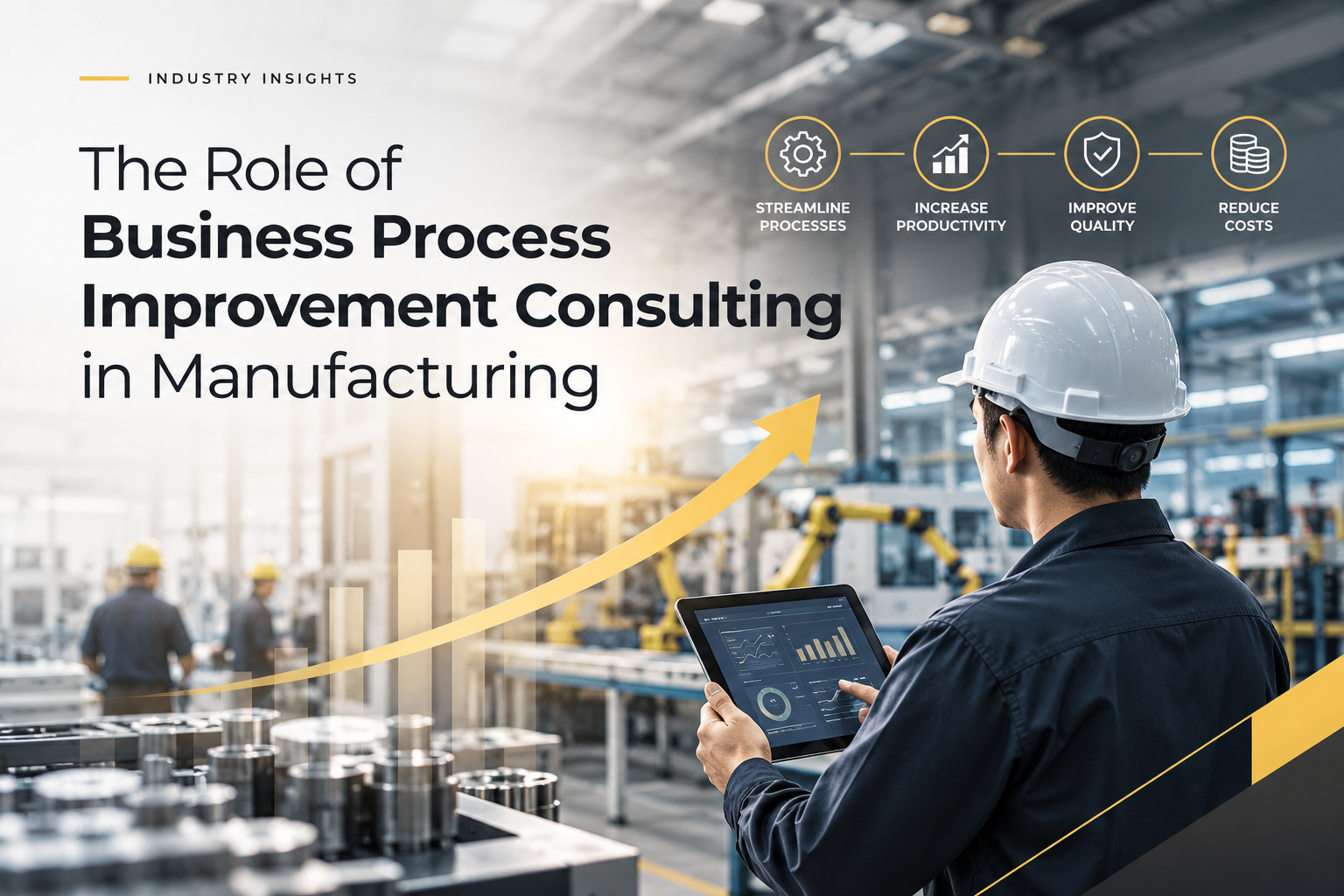
Manufacturing companies often operate through interconnected processes involving procurement, production, quality assurance, inventory and distribution. A problem in one area can affect the performance of the entire operation.
Business process improvement consulting helps manufacturers evaluate these connections and identify opportunities to improve overall efficiency.
For example, a manufacturing SME experiencing frequent production delays may discover that its scheduling process does not reflect actual machine capacity or material availability. By improving production planning, coordinating procurement and monitoring performance, the company can work towards more reliable production schedules and better resource utilization.
Consulting support can also help manufacturers reduce material waste, improve maintenance planning, standardize operating procedures and establish clearer performance measurements.
When combined with appropriate digital tools, these improvements can support better visibility, stronger coordination and more informed management decisions.
Common Challenges in Business Process Improvement
Although process improvement offers significant opportunities, organizations may face several challenges during implementation.
Resistance to change: Employees may be reluctant to adopt new procedures if they do not understand the reasons behind them. Clear communication, training and employee participation can help address this challenge.
Limited resources: SMEs may have restricted budgets, staffing or time for improvement projects. Prioritizing high-impact, achievable changes can help businesses make progress within their constraints.
Lack of reliable data: Without accurate performance information, organizations may struggle to identify the most important problems. Establishing basic data collection and reporting practices can support better decisions.
Unclear objectives: Improvement initiatives may lose direction when expected outcomes are not defined. Businesses should establish measurable targets and assign responsibility for tracking progress.
Insufficient follow-up: Improvements may not last if new procedures are not monitored. Regular performance reviews and clear accountability help maintain progress over time.
Addressing these challenges early can increase the likelihood that process improvement initiatives deliver lasting business value.
How to Measure the Success of Process Improvement
To evaluate the effectiveness of business process improvement, organizations should establish a baseline before implementing changes and compare performance afterward.
Useful KPIs include:
- Operating costs: Measures the cost of running business operations.
- Production cycle time: Tracks the time required to complete a production process.
- Defect rate: Measures the proportion of products that fail to meet quality standards.
- On-time delivery rate: Evaluates whether orders are completed and delivered as scheduled.
- Employee productivity: Assesses output relative to the resources or working time invested.
- Inventory turnover: Helps evaluate how efficiently inventory is managed.
The most relevant KPIs depend on the organization’s objectives and industry. Businesses should select indicators that reflect actual operational priorities rather than tracking too many measurements without a clear purpose.
Why Work with a Business Process Improvement Consultant?
Internal teams understand their daily responsibilities, but they may not always have the time or perspective needed to evaluate the entire organization objectively.
A business process improvement consultant can provide structured analysis, identify opportunities that may have been overlooked and recommend practical solutions aligned with business goals.
Consultants can also help organizations prioritize improvement projects, establish performance indicators, support implementation and develop processes for continuous improvement.
For Malaysian SMEs and manufacturers, this support can be especially useful when businesses need to improve productivity, control operating costs or prepare their operations for expansion.
The right consulting approach should focus on measurable business outcomes, realistic implementation plans and improvements that employees can maintain over time.
Conclusion: Build More Efficient Operations with the Right Strategy
Business process improvement is an important step towards building a more productive, resilient and competitive organization. By reviewing existing workflows, identifying root causes, implementing practical solutions and monitoring performance, businesses can improve efficiency while making better use of their resources.
For manufacturing companies and SMEs, the most effective improvements often begin with understanding where time, money and effort are being lost. From there, organizations can prioritize changes that address their most pressing operational challenges and support long-term growth.
Barton Consultancy helps businesses explore opportunities to strengthen operational performance, improve processes and align business operations with strategic objectives.
Contact Barton Consultancy to discuss how a structured business process improvement approach can help your organization build more efficient operations and achieve sustainable business growth.