

In the glove manufacturing industry, maintaining profitability while ensuring high-quality production can be a significant challenge. Costs related to raw materials, labour and equipment maintenance often drive expenses up. However, through process improvement consulting, manufacturers can unlock significant cost savings and enhance overall operational efficiency. This article explores five effective methods to reduce costs in glove production using process improvement techniques.
Understanding the Role of Process Improvement Consulting in Glove Manufacturing

Process improvement consulting plays a vital role in optimising manufacturing operations. Experts in the field focus on analysing workflows, identifying inefficiencies and designing strategies to improve productivity while reducing operational costs. For glove manufacturers, this process can involve refining production lines, improving supply chain management and enhancing product quality.
5 Proven Methods to Reduce Costs in Glove Production

1. Lean Manufacturing to Eliminate Waste

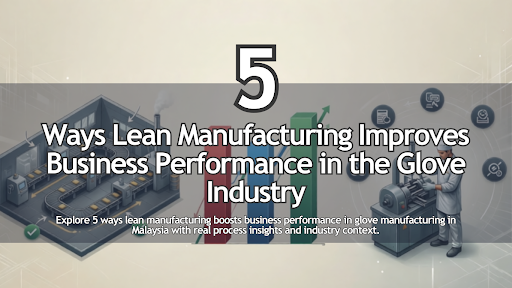
Lean manufacturing is all about maximising value by minimising waste. For glove production, this involves identifying non-value-adding activities and eliminating them. By streamlining production workflows, glove manufacturers can reduce material waste, improve labour efficiency and lower energy consumption.
For instance, improving the layout of production lines and ensuring that workers have the necessary tools and materials within easy reach can drastically cut down on unnecessary movement, reducing both time and labour costs.
Key Actionable Insight: Implementing Lean practices, such as Just-in-Time (JIT) inventory and standardised work procedures, can reduce excess inventory and prevent overproduction. This leads to reduced storage costs and waste disposal expenses.
2. Six Sigma to Improve Quality and Reduce Defects

Six Sigma is a data-driven methodology aimed at reducing defects and improving product quality. In glove manufacturing, even small defects can lead to significant financial losses due to product recalls, rework and customer dissatisfaction.
By employing Six Sigma techniques, manufacturers can map out their production processes, identify areas prone to defects and implement solutions to ensure that production runs smoothly with minimal variations.
Key Actionable Insight: A key tool within Six Sigma is DMAIC (Define, Measure, Analyse, Improve, Control). Glove manufacturers can use DMAIC to track and reduce defects in raw materials or during assembly, ultimately reducing rework and material wastage.
3. Automation and Robotics to Enhance Efficiency

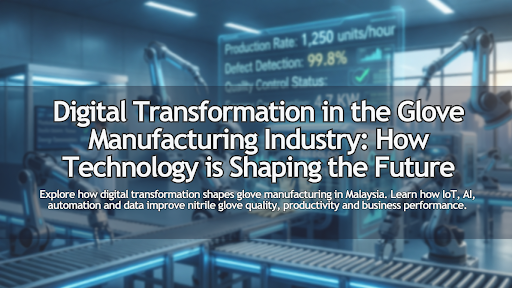
Incorporating automation into glove production lines can lead to substantial cost savings. Automation reduces the reliance on manual labour, minimises human errors and speeds up repetitive tasks. For glove manufacturers, investing in automated machinery to handle tasks like cutting, moulding and packaging can cut the costs and reduce production time.
Automation also allows for better consistency in production, improving overall product quality. For example, automated sorting and packing can reduce the labour costs associated with manual inspection and packing, allowing employees to focus on higher-value tasks.
Key Actionable Insight: Introducing robotics for repetitive and precise tasks can lead to reduced labour costs, enhanced product consistency and faster production cycles.
4. Streamlining the Supply Chain
An inefficient supply chain can significantly inflate production costs. By working with process improvement consultants, glove manufacturers can identify bottlenecks in sourcing raw materials, managing inventory and distributing finished products.
Through supply chain optimisation, manufacturers can reduce lead times, lower storage costs and improve the accuracy of demand forecasting. A smooth and efficient supply chain also prevents stockouts and overstocking, which can both result in additional costs.
Key Actionable Insight: Invest in supply chain management software that integrates with your production system to ensure a streamlined and responsive supply chain. This enables just-in-time inventory management, minimising stockholding costs.
5. Continuous Improvement Culture and Employee Engagement
Sustaining cost reductions and efficiency improvements requires fostering a continuous improvement culture. Process improvement consulting can guide glove manufacturers in implementing a framework where employees are encouraged to identify and suggest improvements in their daily tasks.
Engaging workers in continuous improvement processes not only boosts morale but also leads to innovative cost-saving solutions from those closest to the production lines. By involving employees in process mapping, brainstorming sessions and problem-solving workshops, manufacturers can gather valuable insights that lead to cost reductions.
Key Actionable Insight: Establish a reward system to encourage employees to propose cost-saving ideas, creating a culture of continuous improvement and ownership.
The Role of a Process Improvement Consultant in Glove Manufacturing

A process improvement consultant brings expert knowledge to the table. For glove manufacturers, this means analysing every aspect of their operation, from raw material sourcing to the final stages of packaging and distribution. A consultant will use advanced methodologies such as Lean, Six Sigma and Total Quality Management (TQM) to identify inefficiencies, provide actionable solutions and guide the implementation of improvements.
Key Actionable Insight: A dedicated process improvement consultant can act as an external partner, offering an unbiased perspective while ensuring that changes are sustainable and aligned with your business goals.
Conclusion: Unlocking Cost Savings through Process Improvement Consulting
In conclusion, implementing process improvement consulting can dramatically reduce costs in glove production by optimising workflows, improving quality, enhancing supply chains and fostering a culture of continuous improvement. By adopting methodologies like Lean, Six Sigma and automation, manufacturers can streamline operations, improve efficiency and ultimately boost profitability.
Whether you are looking to eliminate waste, improve product quality or enhance operational efficiency, process improvement consulting offers the tools and expertise you need to drive measurable results in glove manufacturing.