

The nitrile glove industry in Malaysia is moving toward strong growth by 2026. Malaysia remains one of the largest global producers of nitrile gloves, serving healthcare, food processing, pharmaceuticals and industrial sectors. Global market projections show a value of about USD 5.72 billion by 2026, with strong contributions from Malaysian factories. Demand continues to rise as more sectors place stronger emphasis on hygiene, protection and consistent supply. These factors position Malaysia for further expansion as production technology improves and global buyers shift toward latex-free products.
Rising global demand supports both large and mid-sized Malaysian manufacturers. Many factories report stronger export orders from the United States, Europe and the Asia Pacific. This creates opportunities for Malaysia to increase output and raise revenue in both USD and RM. The industry also expects higher interest from investors who want access to a stable demand for nitrile gloves.
Market Landscape for Nitrile Gloves in 2026

By 2026, the nitrile glove market globally is expected to be meaningfully larger than pre-pandemic levels, though individual forecasts differ. Several reputable analyses indicate:
• Global nitrile gloves market value is around USD 5 to 8 billion in the mid-2020s, depending on methodology and scope.
• Compound annual growth rates are typically in the 6 to 10 % range, leading towards 2030.
Within this context, Malaysia continues to play a central role due to its established ecosystem, experienced workforce and mature supply chain. Rubber glove industry briefings show that nitrile gloves already account for roughly two-thirds of Malaysian glove output, reflecting the shift away from natural latex due to allergy concerns and performance requirements.
Healthcare organisations across Malaysia and export markets remain major users of nitrile gloves, driven by infection control, chemical resistance and compatibility with disinfectants and cytotoxic drugs. Hospitals, clinics, laboratories and pharmaceutical facilities commonly specify nitrile as the preferred choice for many applications where latex allergy and chemical exposure are concerns. Industrial growth in sectors such as food processing, electronics assembly, automotive components, semiconductors and petrochemical operations also supports nitrile demand. These industries adopt nitrile gloves for resistance to oils, fuels, solvents and certain chemicals, as well as for lint-free, low particulate handling requirements.
Latex-free products are now a standard expectation in many markets. Clinical guidance, occupational health policies and procurement standards often recommend or require latex-free gloves to reduce the risk of sensitisation and allergic reactions among staff and patients. This trend benefits Malaysian manufacturers that have invested heavily in nitrile capacity and formulations. Across the Asia Pacific, demand growth is supported by expanding healthcare access, new hospitals, pharmaceutical production and stricter food safety regulations. Malaysia benefits from this regional trend due to its production scale, established brands and proven export reliability.
Understanding The Key Trends Driving the Nitrile Glove Industry

1. Increased Demand for Latex-Free Products
Global buyers prefer latex-free gloves due to allergy concerns. Many medical facilities require nitrile gloves as standard protection. Workers in food production and industrial sectors also prefer nitrile for its durability and infection control properties. This shift supports stronger Malaysian exports and helps Malaysian producers maintain competitive advantages.
2. Technological Advancements in Manufacturing
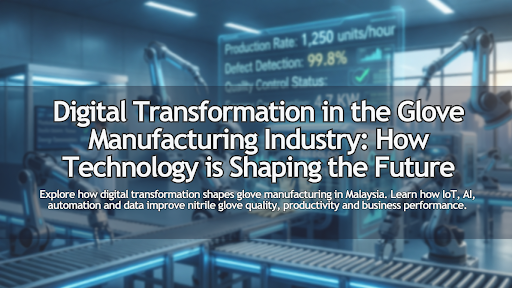
Digital transformation is reshaping Malaysian glove factories. Many factories adopt automation, artificial intelligence, IoT sensors and data-driven systems. These technologies increase precision during dipping, curing and quality control. Automated lines deliver consistent glove weight, thickness and tensile strength. These systems also reduce labour dependency and lower the cost per glove. Many Malaysian factories invest in smart automation to meet global buyers’ expectations for quality and traceability.
3. Growing Focus on Sustainability
Sustainability is a core expectation from international buyers. Malaysian manufacturers respond by exploring biodegradable nitrile materials, water reduction systems and cleaner energy use. These steps reduce environmental impact while maintaining glove performance. Buyers from Europe and the United States increasingly request environmentally responsible production, which encourages more Malaysian factories to adopt sustainable upgrades.
4. Growth of E Commerce and Digital Wholesale Platforms
E-commerce changes how nitrile gloves are purchased in Malaysia and internationally. Online platforms connect Malaysian producers with buyers from various countries, allowing direct access and reducing dependency on intermediaries. This improves price control, reduces lead time and expands market reach in both RM and USD.
Major Challenges Facing the Nitrile Glove Industry

1. Raw Material Price Fluctuations
Nitrile rubber prices move frequently due to global supply and demand. This affects Malaysian manufacturers because raw material cost shifts influence production cost and export pricing. Factories manage this challenge by strengthening supply agreements, improving material efficiency and adopting automated chemical dosing systems.
2. Environmental and Disposal Issues
Large volumes of single-use gloves contribute to environmental concerns. Malaysia faces increasing pressure to manage glove waste responsibly. International regulations also impose standards on disposal. Manufacturers respond through research on biodegradable nitrile materials and improved recycling options. These efforts support sustainability and reduce environmental impact.
3. Pricing Pressure and Competition
Malaysia faces strong competition from China, Thailand and Vietnam. Lower-cost producers create pricing pressure in international markets. Malaysian manufacturers respond by improving quality, adopting digital systems and offering specialised glove types that meet advanced medical and industrial standards.
4. Regulatory Compliance Requirements
The United States and Europe continue to strengthen regulatory certification for glove imports. This requires Malaysian factories to maintain strong quality control, documentation and traceability. Investments in digital inspection systems and automated testing help factories protect market access and reduce the risk of shipment rejection.
Digital Transformation Opportunities in Glove Manufacturing
Digital transformation offers strong opportunities for Malaysian glove manufacturers to raise productivity, lower costs and improve global competitiveness.
1. Automation and AI in Production
Automation reduces manual work and improves precision. AI-based inspection systems detect defects faster and more accurately than manual checks. Automated dipping and curing also create consistent glove quality. These upgrades reduce waste, increase production speed and help Malaysian factories remain competitive in global markets.
2. Data Analytics for Supply Chain Optimisation
Data analytics improves forecasting and raw material management. Malaysian factories use data-driven systems to monitor inventory, chemical consumption and machine performance. This helps reduce waste and supports better planning. Data also improves decision-making for export shipments, pricing strategies and capacity expansion.
3. Blockchain for Transparency
Global buyers request transparency for sourcing and production. Blockchain supports this need by recording every stage of production. Buyers gain confidence when they see verified sourcing and compliance. This strengthens long-term export relationships and helps Malaysian producers meet international standards.
4. E Commerce Platforms for Direct Sales
Direct sales through digital platforms increase international reach. Malaysian producers sell in both RM and USD to expand customer access. This model reduces dependence on distributors and improves profit margins. It also helps factories understand buyer behaviour and respond faster to global demand.
Frequently Asked Questions
What are nitrile gloves and why are they preferred
Nitrile gloves are synthetic rubber gloves that do not contain latex proteins. They offer strong chemical resistance and high durability. This makes them suitable for medical, industrial and food-related applications.
How large will the nitrile glove market be by 2026
The global market is expected to reach about USD 5.72 billion by 2026, with steady growth beyond that year.
Which industries drive demand for nitrile gloves
Healthcare, food processing, automotive, electronics and pharmaceutical sectors drive steady demand in Malaysia and other countries.
What digital opportunities improve glove manufacturing
Automation, artificial intelligence, data analytics, blockchain systems and digital sales platforms create great improvements in efficiency and transparency.
Final Insights on Nitrile Glove Industry 2026 Trends, Challenges and Digital Opportunities
Malaysia holds a strong position in nitrile glove production as global demand rises. Growth in healthcare, industrial use and hygiene awareness supports steady expansion. Manufacturing technology also improves quickly through automation, artificial intelligence and sustainable upgrades. These advancements help Malaysian factories compete globally and deliver high-quality gloves at scale.
Challenges remain in raw material price volatility, environmental impact and increasing regulatory requirements. Digital transformation supports solutions to these challenges. By adopting automation, data-driven systems and sustainable practices, Malaysia can secure strength in global glove supply.