
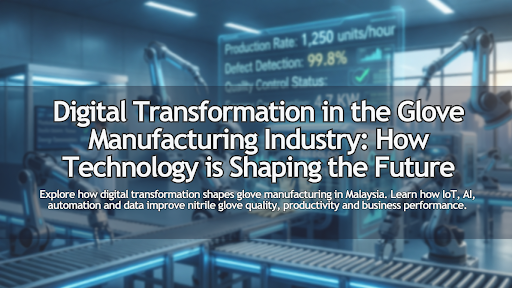
The glove manufacturing industry in Malaysia stands at a critical stage. Global demand for nitrile gloves keeps rising across healthcare, industrial and food sectors. At the same time, cost pressure, labor constraints and stricter quality expectations are reshaping how factories operate. Digital transformation in the glove manufacturing industry now drives competitiveness, efficiency and business performance.
Malaysia supplies a large share of the world’s medical and industrial gloves. Local manufacturers face intense global competition and volatile demand cycles. Digital tools now support smarter production planning, tighter quality control and stronger cost discipline. Companies that invest early gain faster response times and more predictable output.
Digital Transformation in the Glove Manufacturing Industry and Industry Context in Malaysia
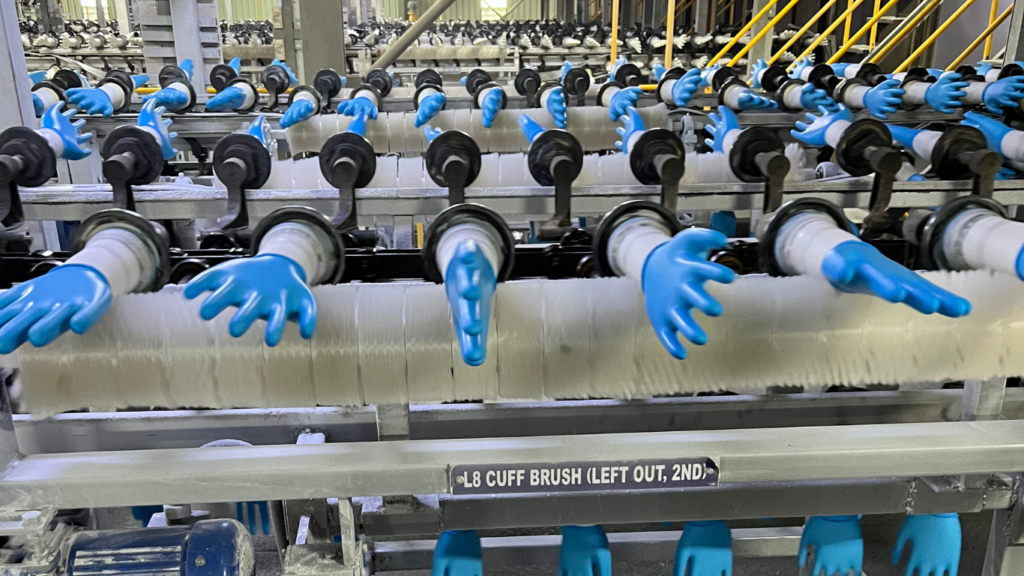
Malaysia remains a global hub for glove manufacturing, especially nitrile gloves. The industry expanded rapidly during the pandemic, then shifted toward efficiency and sustainability. Digital transformation in the glove manufacturing industry now focuses on stabilizing margins and managing scale. Manufacturers no longer rely on volume growth alone.
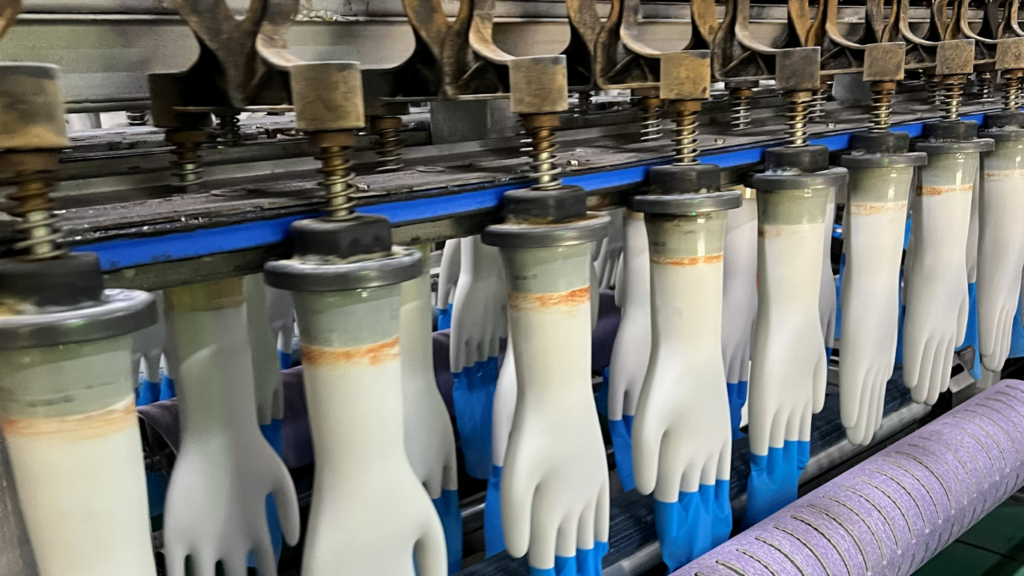
Factories operate hundreds of production lines with complex chemical and mechanical processes. Small inefficiencies create large cost leaks when multiplied across scale. Manual monitoring fails to provide consistent visibility. Digital systems fill this gap by capturing real-time production data across lines and shifts.
Industry leaders invest heavily in smart factories and connected systems. New plants include automation from the design stage. Older facilities retrofit sensors and control software. These moves aim to improve yield, reduce downtime and support business performance.
What Digital Transformation Means in the Glove Manufacturing Industry?
Digital transformation in the glove manufacturing industry refers to the use of digital technologies to improve how factories run, decide, and scale. This approach connects machines, people and data across production and support functions. Managers gain visibility across operations without relying on manual reports. Decisions move from instinct to data.
Manufacturing data flows from machines into centralized platforms. Teams track output, defects, energy use and downtime in real-time. Software highlights issues before they escalate. Managers act faster and with greater confidence.
This transformation also reshapes governance and accountability. Teams measure performance daily and compare results across plants. Continuous improvement becomes structured and measurable. Digital tools support process improvement consulting and operational excellence.
Core Technologies Driving Digital Transformation in the Glove Manufacturing Industry
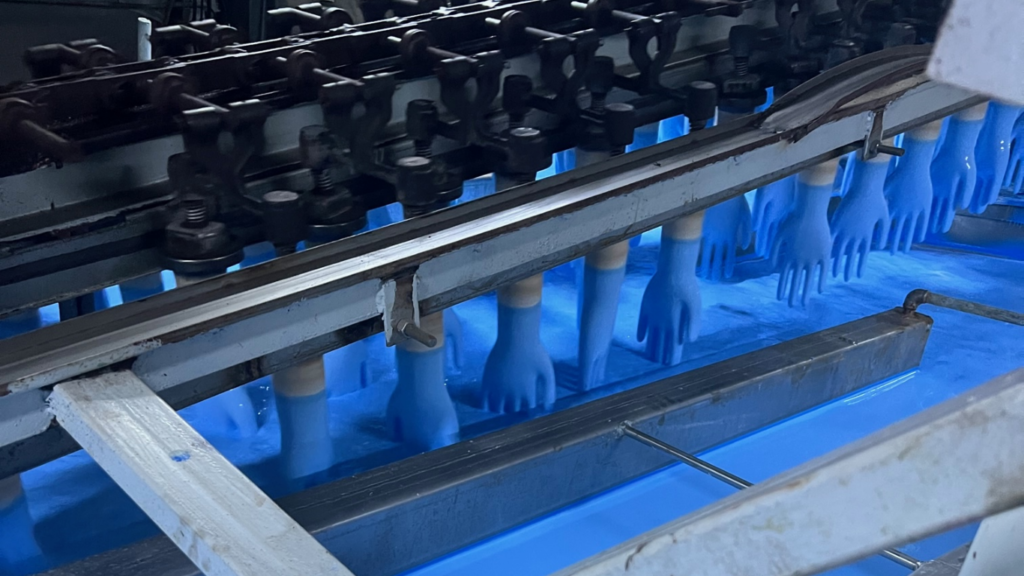
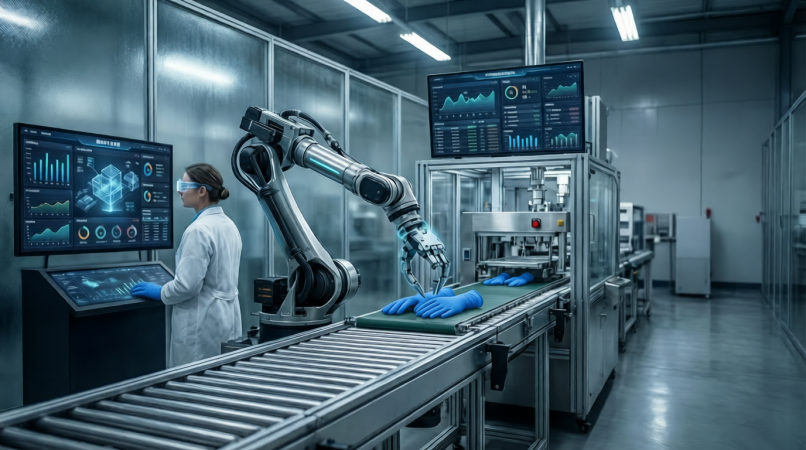
Internet of Things sensors form the foundation of smart glove factories. Sensors capture temperature, pressure, line speed, chemical concentration and machine health. This data flows into dashboards that show current performance and trends. Operators respond faster to deviations.
Artificial intelligence and data analytics processes large volumes of production data. Algorithms detect patterns humans miss. Systems flag abnormal scrap rates or inconsistent glove thickness. Maintenance teams receive early alerts before equipment failure stops production.
Automation and robotics handle repetitive and high-precision tasks. Automated stripping, packaging and material handling reduce reliance on manual labor. Consistency improves across shifts and sites. Factories achieve higher throughput with stable quality.
Digital twins and centralized control systems support simulation and optimization. Engineers test process changes virtually before applying them on the floor. This reduces risk and speeds improvement cycles. Digital transformation in the glove manufacturing industry becomes systematic rather than experimental.
Enhancing Nitrile Glove Quality with AI-Driven Digital Transformation
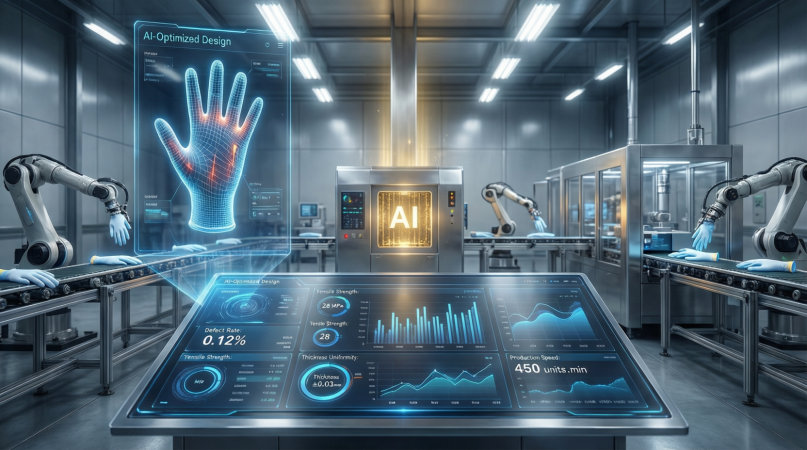
Quality defines brand value in the glove manufacturing industry. Buyers expect consistent thickness, tensile strength and defect-free surfaces. Manual inspection struggles to deliver reliable results at scale. Digital transformation in the glove manufacturing industry addresses this challenge directly.
AI vision systems inspect gloves at high speed. Cameras detect pinholes, tears, stains and surface defects. Systems inspect every glove rather than samples. Defect rates decrease while inspection costs remain stable.
Process data links defects to root causes. Teams trace quality issues back to chemical mixing, temperature drift or equipment wear. Corrective actions become precise and repeatable. Quality improvement shifts from reactive to preventive.
This approach strengthens compliance with global standards. Manufacturers provide digital traceability and audit trails. Customers gain confidence in consistent quality. Strong quality performance supports premium positioning and contracts.
Cost Reduction and Efficiency Gains from Digital Transformation in the Glove Manufacturing Industry
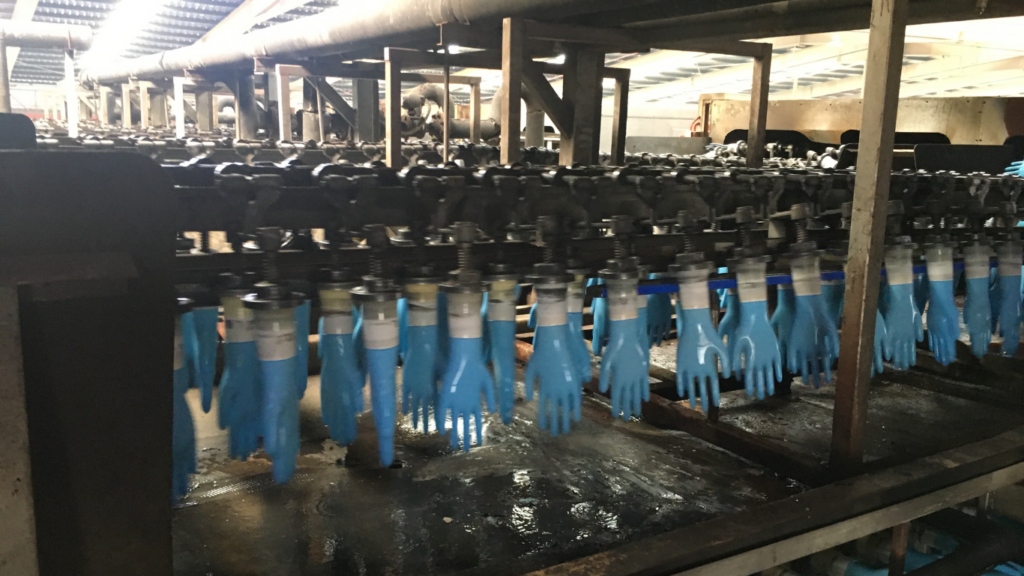
Cost pressure continues to rise across labor, energy and raw materials. Digital transformation in the glove manufacturing industry supports tighter cost control. Data-driven operations identify waste and inefficiency at the source. Savings compound over time.
Automation reduces dependence on manual labor. Rising wages and foreign worker levies impact margins across the region. Automated lines maintain output with fewer operators. Labor shifts toward higher value roles such as monitoring and maintenance.
Predictive maintenance lowers unplanned downtime. Sensors track vibration, heat and cycle counts. Systems predict failure before breakdowns occur. Plants reduce emergency repairs and production losses.
Energy monitoring tools track consumption by line and process. Managers identify high-energy steps and adjust settings. Reduced energy use supports sustainability goals and cost reduction. Efficiency improvements translate directly into stronger business performance.
Understanding the Digital Transformation in the Glove Manufacturing Industry and Workforce Change
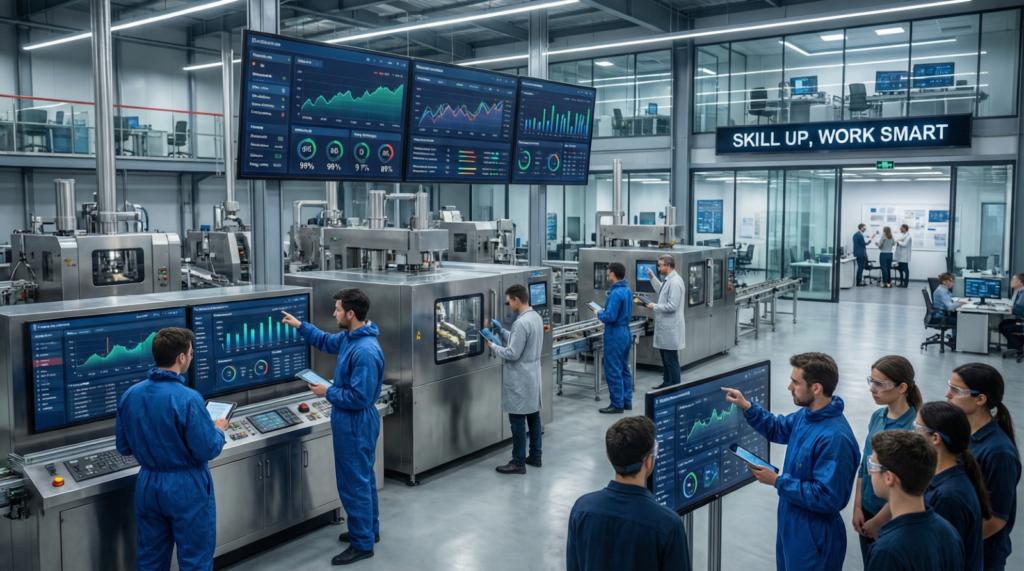
Digital factories still rely on people. The nature of work changes rather than disappears. Digital transformation in the glove manufacturing industry creates demand for new skills and roles. Data literacy becomes essential on the shop floor.
Operators interact with dashboards and alerts. Technicians analyze trends rather than respond only to breakdowns. Engineers use data to refine processes continuously. Training programs focus on digital skills and problem-solving.
Companies that invest in upskilling retain experienced workers. Knowledge transfer improves across teams. Workforce engagement rises when employees see clear career pathways. Digital tools support safer and more structured working environments.
This shift also strengthens employer branding. Skilled workers prefer modern factories with clear development plans. Talent retention supports greater operational stability.
Industry Drivers Accelerating Digital Transformation in the Glove Manufacturing Industry
Global competition pushes manufacturers to improve speed, cost and quality. Buyers compare suppliers across regions. Digital transformation in the glove manufacturing industry helps Malaysian producers defend market share. Faster response times and reliable quality matter.
Labor availability continues to tighten. Dependence on foreign workers creates operational risk. Automation reduces exposure while maintaining scale. Governments also support digital adoption through incentives and policy frameworks.
Customer expectations evolve. Buyers demand traceability, sustainability data and consistent supply. Digital systems provide transparent reporting and compliance evidence. Manufacturers that meet these expectations strengthen customer relationships.
Volatile demand cycles require flexible operations. Digital planning tools adjust output based on real-time orders. Plants avoid excess inventory and sudden shortages. Agility becomes a competitive advantage.
Grasping Practical Steps to Start Digital Transformation in the Glove Manufacturing Industry
Start with a clear operational baseline. Measure current performance across yield, downtime, quality and cost. Data establishes priorities and prevents unfocused investment. Process improvement consulting often supports this phase.
Pilot projects reduce risk. Select one production line or process. Install sensors and dashboards. Train teams and refine workflows. Successful pilots build internal confidence and momentum.
Scale digital systems gradually. Integrate data across lines and plants. Standardize metrics and reporting. Leadership commitment ensures alignment and sustained investment.
Cybersecurity and data governance require early attention. Protect production data and system access. Clear ownership and protocols prevent disruption. Digital transformation in the glove manufacturing industry succeeds when technology and management align.
Answers to Common Questions About Digital Transformation in Manufacturing
What is the digital transformation in the manufacturing process?
Digital transformation in manufacturing integrates digital tools across production, maintenance, quality and planning. Factories collect real time data from machines and longsystems. Teams use analytics to guide decisions and improve outcomes. Processes become measurable, repeatable and scalable.
What are the five main areas of digital transformation?
The five main areas include operations optimization, data and analytics, automation, digital supply chain integration and workforce enablement. Each area reinforces the others. Together, they improve efficiency, quality and business performance.
What is the future of the glove industry?
The future of the glove industry centers on smart factories, automation and data-driven quality control. Manufacturers focus on efficiency, sustainability and resilience. Digital transformation in the glove manufacturing industry supports stable margins beyond demand surges.
Which industry has the most digital transformation?
Manufacturing sectors with complex processes and high volumes lead adoption. Electronics, automotive and glove manufacturing show advanced use of automation and data systems. These industries benefit most from scale and precision.
Closing Up: Why Digital Transformation in the Glove Manufacturing Industry Matters Now
Digital transformation in the glove manufacturing industry no longer serves as a concept. Market pressure and operational complexity make adoption urgent. Companies that delay face higher costs, inconsistent quality and slower response times.
Digital tools support disciplined growth and resilience. They strengthen nitrile gloves production, improve glove manufacturing efficiency and support sustainable business performance. Leaders treat digital transformation as a core strategy rather than a technology project. Manufacturers who act now position themselves for better success. Data-driven operations create clarity, control and confidence in an increasingly competitive global market.